
Beyond Basics: Trick or Treat Tips from our EMS Safety Expert
Last updated on November 24th, 2025 at 06:19 pm
 Break out the costumes and face paint because it’s almost that time of year again, Halloween. While Halloween may be the superbowl Sunday for candy hungry little monsters and superhero’s, it can be a time of worry and anxiety for parents. Aside from having to find the right costume and gear for the kids, the preparation for the activities is of the utmost importance. The following is just a small list of things to consider before Halloween to help everyone have fun and ease some worry.
Plan to go with your child or children. This may seem like a ”no brainer“ but it would surprise you how many people just send children out with a group.
If you are going to go in a group, try to make it a small but manageable group. Groups with large amounts of children can get confusing and problematic, so try to keep the group ratio at 3 to 4 children per adult if possible.
Having the children carry AND wear something lit such as a flashlight, glow bracelet or necklace, or flashing attire for visibility. Light-up shoes are also practical and ever-so-noticeable on a dark Halloween night. Remember, you want them to be seen by cars driving by and you. This goes for parents as well. Parents should be the guides to both kids and cars passing by and that is best accomplished by being easily seen.
Adults should try and plan a route in advance and check it during the daylight for such obstacles as broken sidewalks (or no sidewalks), construction or other obstacles that could trip up trick or treaters. Trick or treating in familiar neighborhoods or areas will make everyone more comfortable and in the event something does happen, it is always best to be in familiar surroundings.
Try to have the children wear well fitting, comfortable shoes, preferably sneakers. While adorable in the store as a costume accessory, kids planning to go trick or treat should wear sturdy shoes and not the princess high-heel, too-large boots, or other types of shoes often shown with costumes. Save those types of shoes for costume parties and not when a child is going to trick or treat. Their feet–and most likely you who may end up carrying either the shoes or the child and you – will both be thankful. Also avoiding costumes that drag on the ground can help as well. While cute initially, costumes that drag can trip up little feet, get caught on bushes, and create a tussle that sometimes results in the child wanting to remove the costume. Remember, kids who trick or treat want to be costumed AND comfortable.
The parent should always go with the child to the door to see what is being handed out (and who is doing the handing out). If what is being handed out looks old, suspicious, or just plain wrong, then move on to the next house or Immediately remove it from your child’s stash and get rid of it or keep it for reporting if necessary. But the most important part is that the child will not have it.
Allergies are on this list too. If your child has food allergies, then it is critical that you inspect everything they have received and do your best to weed out possible problems before your child ingests anything. Bringing along a child EPI-PEN can really do wonders here to give you a little more piece of mind.
Now the staples of Halloween safety will always apply to this list.
- Only approach well lit houses,
- Inspect ALL candy and items in your child’s bounty BEFORE they have a chance to eat it, separate it with friends or hide it somewhere.
- Try and go at dusk before it becomes too dark and much harder to see children and
- Try to walk and not run and
- Always have a cell phone handy in case of emergency.
The list of tips for safety on Halloween can go on forever and when it comes to your children, you can never be too safe, but by using some pre planning and basic safety techniques, you and your monsters, superhero’s and princesses will have a great and safe Halloween.
Why I Don’t Care That October is Bullying Prevention Month
Last updated on November 24th, 2025 at 06:18 pm
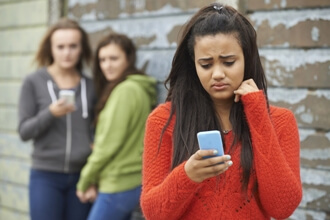 Every October is Bullying Prevention Month, and I couldn’t care less about it. Let me explain why that’s the case. If you’ve read any of my previous articles for Pediatric Safety, you know that I write about cybersafety, which often includes cyberbullying. Certainly, the awareness bullying prevention gets during October is a good thing. Every little bit helps.
It’s very possible that #BullyingPreventionMonth is trending this month or that articles on bullying show up in people’s feed, especially if their past Internet activity has a history of visiting related websites and reading such articles.
But like just about every other cause out there, after the day, week, or month is past, the attention that was generated slips away dramatically. Sadly, unless someone has experienced bullying or knows someone who has, what trends or what shows up in people’s feed will be very different come November first.
If you’re reading this, I’ll assume that you have an interest in stopping bullying. Thank you for that. If so, I ask that you pledge to continue helping all year long. You can do that by taking several easy steps.
Let’s all agree that we don’t want to encourage bullying behavior. Holocaust survivor Elie Wiesel is quoted as saying,
“We must always take sides. Neutrality helps the oppressor, never the victim. Silence encourages the tormentor, never the tormented.”
He couldn’t be more right. He’s also quoted as saying that what hurts the most is the silence of the bystanders who watched and did nothing.
The first step is to be an Upstander. That means standing up for people when you see them being attacked, whether they’re online or offline. If you would help a child in the schoolyard being bullied, then do the same thing if you see it online.
The same principle applies to adults as well, online or offline.
Bottom Line
If you want to help prevent bullying all year long, again, I thank you. You can start by finding good sources of information. Nothing stops a bully than being called out for it!
There are dozens of organizations that can be used as good sources of information about how to prevent it and how to handle it if it does happen. For the sake of space and your time, I’ll limit myself to four.
The first is https://www.stopbullying.gov/, a great source of information supplied by the U.S. government. It covers a wide range of helpful information.
Next comes the Owleus Bullying Prevention Program, provided by Clemson University and the program’s founder, Dan Owleus. Dr. Owleus had a lifetime passion for helping those hurt by bullying in all forms.
The third is the Cyberbullying Research Center, a terrific source of information on cyberbullying around the world. I use it myself and have met one of the founders and he clearly has a passion for bullying prevention.
The last source is my own company, Safety Net of PA, LLC. You can follow my company on Facebook, X, and Instagram, where I give daily information that helps everyone use technology wisely and productively, with an emphasis on cyberbullying prevention.
If you want to look for current/trending content on bullying prevention, look for recent posts with #BeAnUpstander, #PositiveSlamming, #BullyingPrevention, #BullyingAwareness, or #BullyingPreventionMonth hashtags. And then continue to be an Upstander all year long!
Halloween, Kids and Pets …Ensure a Fun Holiday For All
Last updated on November 24th, 2025 at 06:18 pm
 Most of us have nothing but fond memories of this holiday; dressing up in costumes, going door to door with friends and siblings, holding out our huge bags and watching with excitement as our neighbors dropped in handfuls of candy, then going home and dumping the bags out on the floor to gaze at the awesome pile of loot we got! I don’t know about any of you, but in my household, there was no such thing as cutting two holes in a sheet and throwing it over your head and going as a ghost. My mom was (and probably still is) the most creative woman I have ever known. She made the most elaborate Halloween costumes I had ever seen! I think my personal favorite was when my sister went as The Fiddler on the Roof.
But it was a different time when we grew up in the 70’s. A much safer time…. A time when every piece of candy didn’t need to be examined with a fine tooth comb for glass or needles or pin pricks. A time when parents didn’t worry about a car driving by, and never seeing their child again, or that every stranger who walked down the block was a possible pedophile. But sadly, these things are our reality nowadays. The key is to be vigilant and aware to keep your child safe.
But I think there is an added element that sometimes parents do not think to worry about, but should be aware of. Years ago, I do not believe that our household pets were considered as much a part of the family as they are today. And while I happen to love that mentally and understand how easy is it for people to want to include their pets in Halloween as well, (after all, we consider it so much fun! Surely they would enjoy it too!!!) – on another level, I see all of the potential dangers that can come from including the dog in all of this, and I wanted to raise other people’s awareness.
Things that seem harmless to most people but can be dangerous:
- Dressing up your dog in costumes. While it may seem adorable and funny to you, more often than not, they do not find it half as amusing as you do. Most of them already have a full fur coat, and can easily get overheated. Many small dogs are used to having a coat on during the winter, but that does not mean they like having masks and hoods over their heads. It is important to remember that dogs rely on their senses for everything, and if you are putting on a mask or hood that goes over their ears or falls over their eyes, you are putting them at a serious disadvantage right off the bat from distinguishing ‘friend or foe’. For this reason, in a heightened and confused state, a bite can happen all too easily.
- Bringing your dog with you when you trick or treat (…with adult supervision). While I understand the temptation for this, I highly advise leaving the pooch where he belongs…. at home. This is not just a regular typical stroll down the street where you may meet up with a few people. People… kids and adults, are going to be in costumes, so your dog may not recognize even your child’s best friend that he sees all of the time. Again, they are relying on their senses, and some houses are done up quite elaborately… door mats that scream when you step on them, lights that may be flashing or flickering…. All things that are set up to spook and scare you because we humans are a strange breed that enjoy that kind of thing…. but think of how it may scare the heck out of a two year old that cannot understand or rationalize it, and you may now understand your dog’s reaction. This is a supposed to be a special fun time to spend with your kids…. do you really want all of your attention to be focused on ‘controlling’ the dog?
- Sending the dog out with the kids while they trick or treat (…without adult supervision) My customer and her 11 year old daughter both thought it would be awesome if the girl dressed up as Annie and brought their Golden Retriever as Sandy with her. Mom was worried about her daughter trick -or- treating alone, and thought it was great that the dog would be there to protect her, (no one would bother her daughter with a huge dog by her side) and the daughter thought it would be an awesome way to complete her outfit and fun to include the dog. It took some work to convince both Mother and Daughter that this was not a great idea. While the daughter was usually pretty good at handling the dog on the leash, and the dog did heel well with her, if the dog spooked and went to take off, both of them could get hurt. But in the end, the final decision was made by the dog…. Who reiterated everything I told them about the dog acting differently with people in costumes that they don’t understand…. The daughter put on her wig, and the dog ‘wigged out’ (yes… pun intended!) The dog barked at her for 20 minutes straight- until she took off the wig. And it still took the dog awhile to settle down. Many adults would have trouble reigning in or managing a dog’s fearful over-reaction…. I can’t imagine a child being able to.
 Allowing the dog to join you when you open the door to Trick or treaters. When a customer complains to me that their dog barks at everything that passes by outside, I tell them that rather than just yelling at the dog and telling it “NO!”, to understand that it is the dog’s ‘job’ to alert them. So instead of yelling at them for their natural instinct, I will typically allow the dog to bark for about 10-15 seconds, and then tell them, “That is enough… go lie down.” This allows them to do their job, but then they start to understand limits and boundaries. But the fact of the matter is, on this night, the doorbell is ringing constantly, with strangers there, many with no faces (with masks on) and they just don’t understand that there is no threat there. After all…. Think about it, on any other night, if someone rang your door-bell and you opened the door and they were wearing a mask, would you be thrilled to see them? Of course not! You would slam the door closed and call 9-1-1! So how can you possibly explain to your dog that this night is different? The answer is, you can’t. So they either have to be kept in a different room with plenty of chew toys, or someone should stay with them and keep them occupied, or put them in their crate with a cover over it. The last thing you want is your dog getting frightened or charging at the door or worse, biting a strange child who’s hand slips out from their costume to get the treats you have for them.
- Dumping all the candy onto the floor. For many people like me who have worked with dogs for many years, part of my business is also knowing what is healthy for them and what is not…. So if you do not know this, let me be the first to strongly advise you of these three things:
- Chocolate. Chocolate is poisonous to your beloved pet, and should not be left out around them. So it is very important that candy received from trick or treating not be just dumped onto the floor. It can really harm your pet if they get a hold of it. Instead, may I suggest getting each child their own bin or clear see-through bucket to dump their candy into? This way, they can still see all they got, allowing them to have a good view to pick out the few pieces they want each day, and the animals are kept away from any ill-gotten-goods that can really harm them. Please read more on the dangers of chocolate toxicity here…. http://vetmedicine.about.com/cs/nutritiondogs/a/chocolatetoxici.htm
- Sugar-free candies and gum: Sugar-free candies and sugar free gum both contain something in them called xylitol. This is an artificial sweetener that is added to many sugar-free items we humans enjoy, and have few, it any side-effects for us unless consumed in large quantities… in which case the most common side effect is diarrhea. However, for our canine and feline family members, it can often be toxic, and even fatal. Please read more on this here…. http://vetmedicine.about.com/od/toxicology/qt/xylitol_tox.htm
- Candy wrappers, gum wrappers, lollipop sticks and ribbons. These are all potential choking hazards, but can cause much more serious problems if they get caught up or wrapped up in the intestines.
- Allowing your black cat or dog outside. This may seem like a silly thing, but lets face it…. a black cat is almost akin to being a mascot for this holiday. If you have a black cat that is allowed out to wander, you’ll want to keep them inside on this night. And black dogs the past few years have become targets as well. Keep them safe from pranks and theft by keeping them inside.

So I guess if I was to re-cap all of this, I would say to keep the animals inside where they belong. This reduces their anxiety, the risk of unnecessary bites, and keeps everyone involved happy and safe… the way the holiday should be!! Have a happy and safe Halloween everyone!
Did You Know Creativity Enhances Your Child’s Developing Mind?
Last updated on November 24th, 2025 at 06:18 pm
 Children are naturally creative: Their napkins become hats, their drinks are magic potions, and ketchup turns into paint. But aside from being endlessly entertaining, creativity is also critical to their developing brains. Creative and artistic experiences help kids express their feelings and come up with new ideas and ways to solve problems. Studies show that involvement in the arts boosts test scores and promotes academic achievement across the board.
These discoveries may explain why children’s art studios are popping up across the country, giving kids a chance to let their imaginations run wild with paint, clay, and in the case of Make-a-Messterpiece in Glenview, Ill., even bubbles. In addition to private studios (such as KidsArt in California and Washington) and foundations (such as Creative Art Space for Kids in New York), many YMCA branches and local art museums offer art programs.
You can also get your child’s creative juices flowing at home with some very basic art supplies and the right attitude. Bring out the creative genius in your children with these simple tips.
Start With a Blank Slate
Leave projects open-ended so kids are free to imagine the endless possibilities. For example, if you’re painting pumpkins, don’t paint one first as an example, because your kids are likely to try to copy it, quashing their creativity. Instead, simply give children paint and paintbrushes and let them begin. Keep in mind that there are no wrong ways to paint a pumpkin.
Forget Perfection
Focus on the creative process rather than the finished product. For example, your child may find tremendous fun and fulfillment in shaping, squishing, pounding and poking at clay for an hour – even if the end result is a shapeless lump.
Don’t Mind the Mess
Art is not a neat business, and nothing stifles creativity faster than a wet mop or a dustpan underfoot. Let your child get dirty – that’s how she’ll learn to take risks. (Plus, it’s fun!) You can wipe up the glitter later.
Mix It up
Spice up your at-home art projects by using different materials instead of the usual paint, felt, pipe cleaners and beads. Challenge your children to find art supplies in their environment: a sponge, chopsticks, gum wrappers, bottle caps and egg cartons, for example. Head outside and collect leaves, sticks, acorns and small pebbles. Supply children with glue and paper and give no other direction. Be ready for anything.
Expose Them to Diversity
Take trips to museums and zoos; see plays and concerts; attend an African drumming circle, a Mexican fiesta, a Chinese New Year celebration. Every experience your children have with people or situations outside their normal routine widens their range of creative expression.
Make Music
Encourage experimentation with musical instruments without showing how it’s done. Let her play piano with her toes or beat the drum with maracas if she wants. You can make your own instruments too. Dried beans in a toilet paper tube make a great shaker; waxed paper secured over a coffee can is a drum; rubber bands stretched over a shoebox make a guitar. Grab an instrument and play along for a fun family hootenanny.
Allow for Unconventional Ideas
Thinking outside the box is what creativity is all about. When kids come up with a new way of doing things – making a sculpture out of plastic hangers, for instance – go with it (as long as it’s safe, of course). Your support will encourage more creative thinking and problem solving down the road.

