
10 Kidpower Safety Tips for Parents of Young Children
Last updated on November 24th, 2025 at 06:19 pm
Long before they can talk or move on their own, babies are getting lessons from their adults about what it means to be safe and to be important. Our job as adults is to provide nurturing, love, guidance, and protection. As toddlers and preschoolers start to develop more mobility, understanding, and language, our job is also to start teaching them how to be safe in their world and with other people. When it comes to safety, the earliest teachable moment is the best teachable moment as long as this is done in a way that builds understanding and skills rather than creating anxiety or fear. The following safety tips are from Kidpower’s newest book, Earliest Teachable Moment: Personal Safety for Babies, Toddlers, and Preschoolers.
 1. Put Safety First. Kidpower’s Underlying Principle is that, “The safety and healthy self-esteem of a child are more important than anyone’s embarrassment, inconvenience or offense.” Putting safety first seems obvious, but can be hard to uphold in daily life. Don’t let reluctance to inconvenience someone or to be inconvenienced, worry about embarrassing someone or about being embarrassed, fear of offending someone or of feeling uncomfortable, stop you from protecting the emotional and physical safety and well-being of your child.
2. Stay calm and upbeat. Children learn better and feel safer when their adults sound hopeful. Worrying and talking about the bad things that might happen can make everyone anxious without making anyone safer. Instead, focus on all the positive ways you can protect your child from harm most of the time.
3. Stay in charge. Young children do not always have the understanding, skills, or life experience to recognize potential danger – whether from an animal, a cliff, a piece of glass, an electric outlet, a car, or a person who might be unsafe. They are too small and too precious to have their safety left to chance. Make sure you always know who is with your children, where they are going, and what they are doing.
4. Pay attention to your own intuition. If you are even a little bit uncomfortable about a person or a situation involving your child, take action rather than hoping that the problem will go away by itself. No matter what the relationship, your job is to speak up, stick around, intervene, and keep watching until your concerns are addressed.
5. Set a good example. Model staying respectful even if you are frustrated, using your words to solve conflicts, moving away from trouble, advocating for your child and yourself, waiting your turn when you want something, interrupting to get help if you have a safety problem, and being careful.
6. Give your kids practice in taking charge. When playing tickling or roughhousing games, teach children that their “No” means “No” and their “Stop” means “Stop.” For example, when playing a chasing game such as “I’m going to get you!” – sometimes have children stop you by turning, making a stop sign with their hand, and yelling, “STOP!” You can give children practice in throwing hurting words away instead of taking them into their bodies. By stopping, you are teaching children to use their personal power. You can teach preschoolers to imagine that someone is acting scary and coach them to run yelling “I NEED HELP!” to their adult and have that person tell the child, “I will help you!” Give children practice in moving away from anything or anyone they don’t know well and checking first with their adult.
7. Accept children’s right to be upset or have unhappy feelings when you need to set limits. For example, in stopping a child from running off, you might say in a compassionate and firm way, “I see you are angry that I am holding your hand. You want to be able to run without being stopped. Staying together here is not a choice. Holding hands helps keep you safe.”
8. Empower children with choices when you can. Allowing children to choose between the red cup or the blue cup, walking by themselves or being carried, doing something right away or in five minutes, helps children develop decision-making skills and confidence in their personal power.
9. Remember that affection should always be a child’s choice. Let children choose hugging or kissing, even with Grandma. Teach children how to move away from unwanted touch or teasing and say, “Stop. I don’t like that.” Tell adults or other children to respect the child’s wishes by listening and stopping. Remember that forced affection is not love.
10. Listen to Children! Even if their fears seem insignificant to you, listen with compassion and calmness, without lecturing or getting upset. Be a supportive adult for them to come to.
****************************************************************************************************************************
 Kidpower Teenpower Fullpower International is a global nonprofit leader in child protection, positive communication, and personal safety skills for all ages and abilities. Since 1989, Kidpower has protected over 2.5 million children, teens, and adults, including those with special needs, from bullying, abuse, abduction, and other violence through workshops and educational resources. Instead of using fear to teach about violence prevention, Kidpower makes it FUN to learn to be safe. Visit www.kidpower.org to learn about our extensive free online library, affordable books, and workshops. Kidpower’s new book, Earliest Teachable Moment: Personal Safety for Babies, Toddlers, and Preschoolers, is also available on Amazon.
Irene van der Zande is also author of another great book for parents of young children, 1,2,3…The Toddler Years: A Guide for Parents and Caregivers, which includes a forward by child development expert, Magda Gerber. The book can be found on Amazon.
Beyond Basics: Trick or Treat Tips from our EMS Safety Expert
Last updated on November 24th, 2025 at 06:19 pm
 Break out the costumes and face paint because it’s almost that time of year again, Halloween. While Halloween may be the superbowl Sunday for candy hungry little monsters and superhero’s, it can be a time of worry and anxiety for parents. Aside from having to find the right costume and gear for the kids, the preparation for the activities is of the utmost importance. The following is just a small list of things to consider before Halloween to help everyone have fun and ease some worry.
Plan to go with your child or children. This may seem like a ”no brainer“ but it would surprise you how many people just send children out with a group.
If you are going to go in a group, try to make it a small but manageable group. Groups with large amounts of children can get confusing and problematic, so try to keep the group ratio at 3 to 4 children per adult if possible.
Having the children carry AND wear something lit such as a flashlight, glow bracelet or necklace, or flashing attire for visibility. Light-up shoes are also practical and ever-so-noticeable on a dark Halloween night. Remember, you want them to be seen by cars driving by and you. This goes for parents as well. Parents should be the guides to both kids and cars passing by and that is best accomplished by being easily seen.
Adults should try and plan a route in advance and check it during the daylight for such obstacles as broken sidewalks (or no sidewalks), construction or other obstacles that could trip up trick or treaters. Trick or treating in familiar neighborhoods or areas will make everyone more comfortable and in the event something does happen, it is always best to be in familiar surroundings.
Try to have the children wear well fitting, comfortable shoes, preferably sneakers. While adorable in the store as a costume accessory, kids planning to go trick or treat should wear sturdy shoes and not the princess high-heel, too-large boots, or other types of shoes often shown with costumes. Save those types of shoes for costume parties and not when a child is going to trick or treat. Their feet–and most likely you who may end up carrying either the shoes or the child and you – will both be thankful. Also avoiding costumes that drag on the ground can help as well. While cute initially, costumes that drag can trip up little feet, get caught on bushes, and create a tussle that sometimes results in the child wanting to remove the costume. Remember, kids who trick or treat want to be costumed AND comfortable.
The parent should always go with the child to the door to see what is being handed out (and who is doing the handing out). If what is being handed out looks old, suspicious, or just plain wrong, then move on to the next house or Immediately remove it from your child’s stash and get rid of it or keep it for reporting if necessary. But the most important part is that the child will not have it.
Allergies are on this list too. If your child has food allergies, then it is critical that you inspect everything they have received and do your best to weed out possible problems before your child ingests anything. Bringing along a child EPI-PEN can really do wonders here to give you a little more piece of mind.
Now the staples of Halloween safety will always apply to this list.
- Only approach well lit houses,
- Inspect ALL candy and items in your child’s bounty BEFORE they have a chance to eat it, separate it with friends or hide it somewhere.
- Try and go at dusk before it becomes too dark and much harder to see children and
- Try to walk and not run and
- Always have a cell phone handy in case of emergency.
The list of tips for safety on Halloween can go on forever and when it comes to your children, you can never be too safe, but by using some pre planning and basic safety techniques, you and your monsters, superhero’s and princesses will have a great and safe Halloween.
Why I Don’t Care That October is Bullying Prevention Month
Last updated on November 24th, 2025 at 06:18 pm
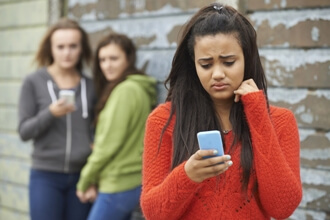 Every October is Bullying Prevention Month, and I couldn’t care less about it. Let me explain why that’s the case. If you’ve read any of my previous articles for Pediatric Safety, you know that I write about cybersafety, which often includes cyberbullying. Certainly, the awareness bullying prevention gets during October is a good thing. Every little bit helps.
It’s very possible that #BullyingPreventionMonth is trending this month or that articles on bullying show up in people’s feed, especially if their past Internet activity has a history of visiting related websites and reading such articles.
But like just about every other cause out there, after the day, week, or month is past, the attention that was generated slips away dramatically. Sadly, unless someone has experienced bullying or knows someone who has, what trends or what shows up in people’s feed will be very different come November first.
If you’re reading this, I’ll assume that you have an interest in stopping bullying. Thank you for that. If so, I ask that you pledge to continue helping all year long. You can do that by taking several easy steps.
Let’s all agree that we don’t want to encourage bullying behavior. Holocaust survivor Elie Wiesel is quoted as saying,
“We must always take sides. Neutrality helps the oppressor, never the victim. Silence encourages the tormentor, never the tormented.”
He couldn’t be more right. He’s also quoted as saying that what hurts the most is the silence of the bystanders who watched and did nothing.
The first step is to be an Upstander. That means standing up for people when you see them being attacked, whether they’re online or offline. If you would help a child in the schoolyard being bullied, then do the same thing if you see it online.
The same principle applies to adults as well, online or offline.
Bottom Line
If you want to help prevent bullying all year long, again, I thank you. You can start by finding good sources of information. Nothing stops a bully than being called out for it!
There are dozens of organizations that can be used as good sources of information about how to prevent it and how to handle it if it does happen. For the sake of space and your time, I’ll limit myself to four.
The first is https://www.stopbullying.gov/, a great source of information supplied by the U.S. government. It covers a wide range of helpful information.
Next comes the Owleus Bullying Prevention Program, provided by Clemson University and the program’s founder, Dan Owleus. Dr. Owleus had a lifetime passion for helping those hurt by bullying in all forms.
The third is the Cyberbullying Research Center, a terrific source of information on cyberbullying around the world. I use it myself and have met one of the founders and he clearly has a passion for bullying prevention.
The last source is my own company, Safety Net of PA, LLC. You can follow my company on Facebook, X, and Instagram, where I give daily information that helps everyone use technology wisely and productively, with an emphasis on cyberbullying prevention.
If you want to look for current/trending content on bullying prevention, look for recent posts with #BeAnUpstander, #PositiveSlamming, #BullyingPrevention, #BullyingAwareness, or #BullyingPreventionMonth hashtags. And then continue to be an Upstander all year long!
Halloween, Kids and Pets …Ensure a Fun Holiday For All
Last updated on November 24th, 2025 at 06:18 pm
 Most of us have nothing but fond memories of this holiday; dressing up in costumes, going door to door with friends and siblings, holding out our huge bags and watching with excitement as our neighbors dropped in handfuls of candy, then going home and dumping the bags out on the floor to gaze at the awesome pile of loot we got! I don’t know about any of you, but in my household, there was no such thing as cutting two holes in a sheet and throwing it over your head and going as a ghost. My mom was (and probably still is) the most creative woman I have ever known. She made the most elaborate Halloween costumes I had ever seen! I think my personal favorite was when my sister went as The Fiddler on the Roof.
But it was a different time when we grew up in the 70’s. A much safer time…. A time when every piece of candy didn’t need to be examined with a fine tooth comb for glass or needles or pin pricks. A time when parents didn’t worry about a car driving by, and never seeing their child again, or that every stranger who walked down the block was a possible pedophile. But sadly, these things are our reality nowadays. The key is to be vigilant and aware to keep your child safe.
But I think there is an added element that sometimes parents do not think to worry about, but should be aware of. Years ago, I do not believe that our household pets were considered as much a part of the family as they are today. And while I happen to love that mentally and understand how easy is it for people to want to include their pets in Halloween as well, (after all, we consider it so much fun! Surely they would enjoy it too!!!) – on another level, I see all of the potential dangers that can come from including the dog in all of this, and I wanted to raise other people’s awareness.
Things that seem harmless to most people but can be dangerous:
- Dressing up your dog in costumes. While it may seem adorable and funny to you, more often than not, they do not find it half as amusing as you do. Most of them already have a full fur coat, and can easily get overheated. Many small dogs are used to having a coat on during the winter, but that does not mean they like having masks and hoods over their heads. It is important to remember that dogs rely on their senses for everything, and if you are putting on a mask or hood that goes over their ears or falls over their eyes, you are putting them at a serious disadvantage right off the bat from distinguishing ‘friend or foe’. For this reason, in a heightened and confused state, a bite can happen all too easily.
- Bringing your dog with you when you trick or treat (…with adult supervision). While I understand the temptation for this, I highly advise leaving the pooch where he belongs…. at home. This is not just a regular typical stroll down the street where you may meet up with a few people. People… kids and adults, are going to be in costumes, so your dog may not recognize even your child’s best friend that he sees all of the time. Again, they are relying on their senses, and some houses are done up quite elaborately… door mats that scream when you step on them, lights that may be flashing or flickering…. All things that are set up to spook and scare you because we humans are a strange breed that enjoy that kind of thing…. but think of how it may scare the heck out of a two year old that cannot understand or rationalize it, and you may now understand your dog’s reaction. This is a supposed to be a special fun time to spend with your kids…. do you really want all of your attention to be focused on ‘controlling’ the dog?
- Sending the dog out with the kids while they trick or treat (…without adult supervision) My customer and her 11 year old daughter both thought it would be awesome if the girl dressed up as Annie and brought their Golden Retriever as Sandy with her. Mom was worried about her daughter trick -or- treating alone, and thought it was great that the dog would be there to protect her, (no one would bother her daughter with a huge dog by her side) and the daughter thought it would be an awesome way to complete her outfit and fun to include the dog. It took some work to convince both Mother and Daughter that this was not a great idea. While the daughter was usually pretty good at handling the dog on the leash, and the dog did heel well with her, if the dog spooked and went to take off, both of them could get hurt. But in the end, the final decision was made by the dog…. Who reiterated everything I told them about the dog acting differently with people in costumes that they don’t understand…. The daughter put on her wig, and the dog ‘wigged out’ (yes… pun intended!) The dog barked at her for 20 minutes straight- until she took off the wig. And it still took the dog awhile to settle down. Many adults would have trouble reigning in or managing a dog’s fearful over-reaction…. I can’t imagine a child being able to.
 Allowing the dog to join you when you open the door to Trick or treaters. When a customer complains to me that their dog barks at everything that passes by outside, I tell them that rather than just yelling at the dog and telling it “NO!”, to understand that it is the dog’s ‘job’ to alert them. So instead of yelling at them for their natural instinct, I will typically allow the dog to bark for about 10-15 seconds, and then tell them, “That is enough… go lie down.” This allows them to do their job, but then they start to understand limits and boundaries. But the fact of the matter is, on this night, the doorbell is ringing constantly, with strangers there, many with no faces (with masks on) and they just don’t understand that there is no threat there. After all…. Think about it, on any other night, if someone rang your door-bell and you opened the door and they were wearing a mask, would you be thrilled to see them? Of course not! You would slam the door closed and call 9-1-1! So how can you possibly explain to your dog that this night is different? The answer is, you can’t. So they either have to be kept in a different room with plenty of chew toys, or someone should stay with them and keep them occupied, or put them in their crate with a cover over it. The last thing you want is your dog getting frightened or charging at the door or worse, biting a strange child who’s hand slips out from their costume to get the treats you have for them.
- Dumping all the candy onto the floor. For many people like me who have worked with dogs for many years, part of my business is also knowing what is healthy for them and what is not…. So if you do not know this, let me be the first to strongly advise you of these three things:
- Chocolate. Chocolate is poisonous to your beloved pet, and should not be left out around them. So it is very important that candy received from trick or treating not be just dumped onto the floor. It can really harm your pet if they get a hold of it. Instead, may I suggest getting each child their own bin or clear see-through bucket to dump their candy into? This way, they can still see all they got, allowing them to have a good view to pick out the few pieces they want each day, and the animals are kept away from any ill-gotten-goods that can really harm them. Please read more on the dangers of chocolate toxicity here…. http://vetmedicine.about.com/cs/nutritiondogs/a/chocolatetoxici.htm
- Sugar-free candies and gum: Sugar-free candies and sugar free gum both contain something in them called xylitol. This is an artificial sweetener that is added to many sugar-free items we humans enjoy, and have few, it any side-effects for us unless consumed in large quantities… in which case the most common side effect is diarrhea. However, for our canine and feline family members, it can often be toxic, and even fatal. Please read more on this here…. http://vetmedicine.about.com/od/toxicology/qt/xylitol_tox.htm
- Candy wrappers, gum wrappers, lollipop sticks and ribbons. These are all potential choking hazards, but can cause much more serious problems if they get caught up or wrapped up in the intestines.
- Allowing your black cat or dog outside. This may seem like a silly thing, but lets face it…. a black cat is almost akin to being a mascot for this holiday. If you have a black cat that is allowed out to wander, you’ll want to keep them inside on this night. And black dogs the past few years have become targets as well. Keep them safe from pranks and theft by keeping them inside.

So I guess if I was to re-cap all of this, I would say to keep the animals inside where they belong. This reduces their anxiety, the risk of unnecessary bites, and keeps everyone involved happy and safe… the way the holiday should be!! Have a happy and safe Halloween everyone!
We ALL Need To Observe National Child Passenger Safety Week
 We struggle in so many ways to keep our children and grandchildren safe from the many dangers we know are out there, both on the streets and in our homes. Yet surprisingly, even those who love them the most, are willing to do everything in their power to protect them from harm, still allow them to be exposed to a dangerous situation, sometimes several times a day. I’m talking about the few minutes required to make sure they are properly restrained in their car.
I’m a grandma. When my own children were young, there were no child restraint safety seats, therefore, no safety regulations regarding their use. Seatbelts were the only safety measures available in cars, and their use was not yet mandatory. Today, with the availability of four types of safety restraints for children based on age, height and weight statistics – and a step-by-step instruction guide to help you figure out which one you need (thank you!) – the watchdogs of child safety have made the use of the proper restraint a no-brainer. Combined with easy-to-follow installation methods (including offering videos as well as live help options) the only part of protection that remains to be taken care of is making sure the restraints are closed properly. That job was never intended to be left for the “kids” to handle themselves. What I think has happened over the last number of years is, with Mom or another caregiver transporting children to school, doctors, play dates, lessons, sports, shopping, etc . . . , everyone is in and out of the car so many times a day, that the easy way out took precedence over what is correct. We let the kids buckle themselves in. But making sure they are safe is an adult responsibility.
It’s time for a reality check. Too many children are killed or maimed each year because an otherwise loving, conscientious caregiver did not realize that the child safety restraint was not the proper one, was not installed correctly, or was not secured the right way. These are senseless and preventable tragedies.

Reaching out to and teaching these loving caregivers that help is available to minimize or eliminate the injuries sustained by children in a car crash has become the mission of the National Highway Traffic Safety Administration. This week, September 21 through September 27, has been designated National Child Passenger Safety Week. Using all the tools at its disposal to spread awareness and make safety checks available to anyone interested in keeping children safe while being transported in a car, NHTSA has gone all-out to spread the word.
We wish everyone concerned in this worthwhile endeavor “good luck”. We’re hoping that every person reading this takes the time to forward the information and the links to all the caregivers they know.
Tips for Parents of Kids Entering the Entertainment Industry
Last updated on September 27th, 2025 at 12:09 am
It all started when our daughter was 11 months old. I remember the day clearly. She was sitting in an infant seat in a neighborhood McDonald’s when a stranger walked up to our table and handed my husband a dollar bill.
“Your daughter is so pretty with her red – hair and I want to just give you some money to buy her something. You should get her an agent – she really is pretty.”
We were both at a loss for words. What was the meaning of this action? We were perplexed. And yes, as the years passed and her mane of red – curly hair grew, our young daughter continued to attract attention and we continued to be offered all kinds of “career” advice for her.  So, it came as no surprise when she was about seven years old that our first – born announced she wanted to be on television like the Olsen twins from Full House. Luckily, we were able to postpone our budding thespian to the age of twelve.
In retrospect, I wish I had researched what to expect when you have a child join the professional world of the performing arts. Most of what I learned was through trial and error, word of mouth and a few books or articles that gave a realistic perspective. This article is my way of educating parents of talented kids what I wish we had known.
In no certain order:
- Have a life of balance, set limits, and give assurances.
I am a firm believer that kids need to be kids. They need to run and play and figure out life on the playground and not on a movie set or on stage. However, there are some children that have a passion for the performing arts and for them being in this realm IS their form of play. How to create balance while not squashing talent? Allow your child to safely explore and develop skills. Let their creative juices flow by putting a video camera in their hands to practice their monologues or allow them to write their own scripts. This may be their way of seeking enjoyment in a healthy and constructive manner.
Be mindful of the child who is hyper-focused on “the career” and not allowing balance. This is a child who may be feeling an overwhelming sense of pressure to perform, fear of rejection or worried that walking away would be huge disappointment to the parent(s). Allow them to walk away. No amount of fame or money is worth the emotional health of a child.
…And what about the financial piece?
Reassure your child that at the end of the day all will be OK if the part is not secured, the role is cut, etc. Some children carry a huge burden that they believe their family is depending on their success for income. Not only is that an emotional strain that creates a huge amount of stress, but also, it is not fair if the parents do indeed say that.
Read a recent CNN article about when parents put too much pressure on their children.
- The whole family joins in this venture – whether they want to or not!
In the movie FAME there is a famous line when a young performer gets accepted in to the school for the performing arts. The mother shouts, “WE made it!”
T his scene may be from a Hollywood production, but in fact is a reality in homes worldwide. You may not realize it, but the whole family joins the entertainment business when a family member does. Schedules may need to be rearranged. Financial burden may result due to lack of parental wages (a parent or appointed guardian must accompany a minor) and music, acting and dance teachers need to be paid.
And, then there are the siblings. What becomes of them when their parent(s) are busy with the actor in the family? Who brings them to football practice or gymnastics? Why does everyone pay attention to the one child who is a musical prodigy and not to them? The siblings are the ones’ that often concern me the most as what will they do to shine the spotlight on themselves if they don’t receive the same attention as their more “famous” sibling. And how will the family dynamic change when the performing child moves from the home to seek fortune in fame in Hollywood, Broadway or other destinations? Which parent will join and which will remain at home? It is important to keep tabs on the emotional and physical health of all in the family when you are parenting the talented. Many families can negotiate with ease the changes in family dynamic while others find the pressure insurmountable. Family meetings can be helpful to keep the lines of communication open and all in check.
Sometimes the child and family will get caught up in the excitement of the entertainment world. There even may be some early successes or awards offered that give the child a false sense that they are beyond the need for education. “They already have a job – so why go to school?”
Parents let me tell you as an educator and a parent to a child who did have success at a young age – education MUST be a priority. Why? Simply, because at the end of the day there are a thousand cute red – headed girls who are all very talented. And not everyone can be the principal dancer at ABT.
Imagine what life would be like for the child if they did not have a proper educational foundation? In this competitive world we as parents are responsible for providing an education for our child that will give them building blocks for the future. Moreover, emphasize that college IS the plan or at the very least- the back up plan!
Read about famous child performers who have attended college
And learn how education is listed as a top priority within the performing arts industry, too. Read more
- Safety also MUST be a priority.
 This is a business where you need to go to the thousandth mile in doing your due diligence. There are a lot of good people in the entertainment industry. Many will actually care about your child. But in reality, there also are creeps and scammers. The problem is that the good guys look and sound a lot like the bad guys. That is when you get to become the “parent sleuth”. Investigate the person who claims to be the “best acting coach in town.” Be an advocate for your child when it comes to issues of safety by checking on licensure and reputation of all involved.
Recommendations for keeping a minor safe in the entertainment industry: Read here
- Learn who does what role in the industry and where to find concrete information that is reliable and valid. Click the links below for great resources.
- Screen Actors Guild and American Federation of Television and Radio Artists
- Talent Managers
- Talent Agents
- Resources for children with special needs in the acting field
- Read how the Coogan Laws keep your child’s finances safe.
NOTE: For headshots, sizzle reels, etc. please use only reputable and recommended resources. And never allow your child, tween or teen go to a headshot session or audition alone.
In closing, a child working in the performing arts can be exposed to some wonderful opportunities and fun. It can be an amazing experience and one the whole family can enjoy. I wish all who pursue this adventure much success!
“Break a leg!”

