
March 5th at AMC, The Unbreakable Boy is Sensory Friendly
Last updated on April 14th, 2025 at 06:35 pm
 Since 2007, AMC Entertainment (AMC) and the Autism Society have teamed up to bring families affected by autism and other special needs “Sensory Friendly Films” every month – a wonderful opportunity to enjoy fun new films in a safe and accepting environment. And this coming Wednesday, The Unbreakable Boy is Sensory Friendly at AMC.
The movie auditoriums will have their lights turned up and the sound turned down. Families will be able to bring in snacks to match their child’s dietary needs (i.e. gluten-free, casein-free, etc.), there are no advertisements or previews before the movie and it’s totally acceptable to get up and dance, walk, shout, talk…and even sing – in other words, AMC’s “Silence is Golden®” policy will not be enforced during movie screenings unless the safety of the audience is questioned.
Does it make a difference? Absolutely! Imagine …no need to shhhhh your child. No angry stares from other movie goers. Many parents think twice before bringing a child to a movie theater. Add to that your child’s special needs and it can easily become cause for parental panic. 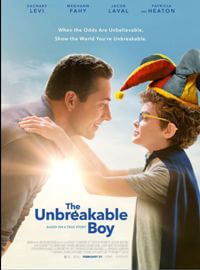 But on this one day, for this one screening, everyone is there to relax and have a good time, everyone expects to be surrounded by kids – with and without special needs – and the movie theater policy becomes “Tolerance is Golden“.
Families affected by autism or other special needs can view a sensory friendly screening of The Unbreakable Boy, this Wednesday, March 5th (check your local theater for times). Tickets are typically 25% off for the sensory friendly screenings, depending on the location. To find a theatre near you, here is a list of AMC theatres nationwide participating in this fabulous program (note: to access full list, please scroll to the bottom of the page).
Also Sensory Friendly at AMC in March: Captain America: Brave New World (Sat. 3/8 and Wed. 3/12)
****************************************************************************************************************************
Editor’s note: Although The Unbreakable Boy has been chosen by the AMC and the Autism Society as this month’s Sensory Friendly Film, we do want parents to know that it is rated PG by the Motion Picture Association of America for strong thematic material, alcohol abuse, language and some violence. As always, please check the IMDB Parents Guide for a more detailed description of this film to determine if it is right for you and your family.
Saving Lives – Helping Kids Escape a Locked Car Trunk
Last updated on March 29th, 2025 at 04:04 pm
 We all know little kids love to climb. And hide-and-seek is often a favorite game. Unfortunately no matter how often you stress the danger, a car trunk can still look like a great place to play. That said, I think all of us would agree that with little kids around it’s a good idea to have an internal trunk release – especially since they are known to be the easiest and fastest way to escape from inside of a car trunk. What may not be commonly known however is that most vehicles older than model year 2002 do NOT have a trunk release accessible from inside the trunk compartment. An organization called Kids and Cars has made it a priority to not only pass on this information but to try and address the problem.
Kids and Cars‘ goals are to ensure that not only are children never left unattended in or around vehicles but also to support the design of safer vehicles that eliminate unnecessary deaths and injury to children. Kids and Cars maintains a national database tracking deaths and injuries to children left unattended in or around motor vehicles. Currently there is no federal or state agency that collects this information
In 2009, Janette Fennell, founder of Kids and Cars.org appeared on SpikeTV’s “Surviving Disaster: Home Invasion” during the segment on how to escape from a locked car trunk. Shortly after the broadcast, (upon receiving an abundance of requests), Kids and Cars began offering an after-market Emergency Trunk Release kit. If you do not currently have an emergency glow-in-the-dark trunk release, it is imperative you purchase one, whether from Kids and Cars or elsewhere; if you have one I highly recommend making sure every child knows what it is and how to use it.
Too many children have lost their lives after gaining access to a car trunk that did not have this simple safety device. Not a single trunk related fatality has been reported where one of these devices was installed.
The message is clear…we just need to hear it.
THE WILD ROBOT is Sensory Friendly 2x in October at AMC
Last updated on November 17th, 2024 at 03:22 pm
Since 2007, AMC Entertainment (AMC) and the Autism Society have teamed up to bring families affected by autism and other special needs “Sensory Friendly Films” every month – a wonderful opportunity to enjoy fun new films in a safe and accepting environment. And this coming Saturday, The Wild Robot is Sensory Friendly at AMC.
The movie auditoriums will have their lights turned up and the sound turned down. Families will be able to bring in snacks to match their child’s dietary needs (i.e. gluten-free, casein-free, etc.), there are no advertisements or previews before the movie and it’s totally acceptable to get up and dance, walk, shout, talk…and even sing – in other words, AMC’s “Silence is Golden®” policy will not be enforced during movie screenings unless the safety of the audience is questioned.
Does it make a difference? Absolutely! Imagine …no need to shhhhh your child. No angry stares from other movie goers. Many parents think twice before bringing a child to a movie theater. Add to that your child’s special needs and it can easily become cause for parental panic.  But on this one day, twice a month, for this one screening, everyone is there to relax and have a good time, everyone expects to be surrounded by kids – with and without special needs – and the movie theater policy becomes “Tolerance is Golden“.
Families affected by autism or other special needs can view a sensory friendly screening of The Wild Robot on Saturday, October 12th or Saturday October 26th (check your local theater for times). Tickets are typically 25% off for the sensory friendly screenings, depending on the location. To find a theatre near you, here is a list of AMC theatres nationwide participating in this fabulous program (note: to access full list, please scroll to the bottom of the page).
Also Sensory Friendly at AMC in October: Joker: Folie a Deux (Tues. 10/9)
****************************************************************************************************************************
Editor’s note: Although The Wild Robot has been chosen by the AMC and the Autism Society as this month’s Sensory Friendly Film, we do want parents to know that it is rated PG by the Motion Picture Association of America for action/peril and thematic elements. As always, please check the IMDB Parents Guide for a more detailed description of this film to determine if it is right for you and your family.
Happy 15 Year Anniversary Pediatric Safety!
Last updated on October 23rd, 2024 at 03:58 pm
July 17, 2009
 Can it possibly be 15 years since Pediatric Safety published its first story? It feels like just yesterday…yet so much has changed since then, and is continuing to change every day.
Back in 2009, our goal was to create a place where everyone who cares about children’s health and safety could get together to stay informed on all the topics that have the potential to affect them and the children in their care. We wanted to make a difference. It didn’t take long to realize that we couldn’t do it on our own.
So we reached out – to parents and doctors and nurses and emergency responders and teachers – to child safety experts around the world – and we asked them for help. And some truly amazing people stepped in to share the journey with us: a pediatrician, a character development and bullying prevention expert, a cybersafety specialist, a family dentist, an EMS safety expert, a child psychologist, a kids and canines specialist, a special needs parenting expert, and a food allergy specialist – all volunteered their time to help make this site a community where you can find answers and hopefully give answers to others when they need them.
We were also fortunate to be offered the opportunity to include NHS Choices articles on Pediatric Safety. NHS Choices is the UK’s biggest, most comprehensive health information website. The articles they have shared with us span the full range of child health and safety issues: from living with disabilities to surviving childhood bullying; from adoption and fostering to puberty and talking about sex; from asthma and allergies to health and fitness.
All told, Pediatric Safety has published almost TWO THOUSAND posts and over TWENTY THOUSAND tweets about child health and safety. And there is more to come, along with some major changes to the site, so please keep coming back and letting us know how we’re doing!
For now, we’d like you to invite you to join us as we celebrate our 15 Year Anniversary
 We’re going to take a “look back” at the stories you’ve told us are your favorites – the ones you’ve told us have had the biggest impact on you and your family.
- Bronchiolitis or “Wheezy Bronchitis” and Kids
- Drowning: What Every Parent NEEDS to Know!
- Our Miracle Baby: Aidan’s Story of Surviving CDH
- Is it Too Young to Remove Wisdom Teeth at Age 13?
- In Memory of Noah…please watch your children around cars
********************************************************************************************************************
Finally we’d like to thank all of you who have taken this journey with us. At its heart, Pediatric Safety is a place where people can support each other – the village needed to raise a child. If we’ve been able to accomplish even a little of that, then this has been 15 years well spent. We look forward to sharing the days ahead. – with love and gratitude from all of us here at Pediatric Safety
Did You Know…Every 2 Weeks a Child Dies From a “Tipover”?
Last updated on September 7th, 2024 at 06:29 pm
 It’s not something we like to think about…and it certainly could never happen to us…but the reality is that every 2 weeks a child dies because an unsecured appliance or piece of furniture has toppled over onto them. In fact between 2000–2008, the CPSC received reports of nearly 200 tipover deaths among children 8 and younger. More than 90% of them involve children under 5!
Typically, injuries and deaths occur when children climb onto, fall against or pull themselves up on television stands, shelves, bookcases, dressers, desks, chests and appliances. Sometimes it’s the out-of-reach item placed on top of furniture, in other cases it’s the furniture or appliance itself that will topple causing serious if not fatal injuries. The CPSC has issued a warning, urging parents to inspect and secure these items. They also offer the following safety tips:
- Furniture should be stable on its own. For added security, anchor chests, dressers, TV stands, bookcases and entertainment units to the floor or attach them to a wall.
- Place TVs on a sturdy, low-rise base. Avoid flimsy shelves.
- Push the TV as far back on its stand as possible.
- Place electrical cords out of a child’s reach and teach kids not to play with them.
- Keep remote controls and other attractive items off the TV stand so kids won’t be tempted to grab for them and risk knocking the TV over.
- Make sure free-standing ranges and stoves are installed with anti-tip brackets.
One thing we often forget is that even when our own home has been thoroughly baby-proofed, our friends and family’s homes will likely not have received the same attention. It’s up to us to be vigilant…wherever we may be.
Today is National Heatstroke Prevention Day 2023!
Last updated on December 4th, 2023 at 07:29 pm
Every year on average, 40 children die in hot cars in the US
What can you do??
- Always keep cars locked & keys out of reach of children. If a child is missing – check in all cars!
- Ask childcare to call you if your baby doesn’t show up as planned!
- A car is not a babysitter. NEVER leave a child or animal alone inside a vehicle, not even for a minute!
- See a child alone in a car? Get involved! Call 911 immediately
- If you think it can’t happen to you, please think again. (Ray Ray’s Story)

*Image credit: kidsandcars.org

