
Personal WaterCraft & Kids: How to Make Them Fun AND Safe!
 Summer is fast approaching and that means that thousands of children will be hitting the water looking to go fast! Summer is the time to think about the beach and being outside and speeding around oceans, lakes or canals in PWC or personal watercrafts. PWC have steadily risen in ownership in the U.S to well over a million and with that increase in ownership come’s an increase in operators and injuries to the tune of over 12,000 documented injuries annually. Most injuries seem to occur when PWC collide—either with other vessels including other PWC or with fixed objects such as docks or tree stumps. Behavioral factors cited in 3 studies include operator inexperience (most operators had <20 hours of experience in boat operation), operator inattention, and excess speed or reckless operation. Some PWC can seat as many as 3 people and hit speeds of 60 mph. PWC are the only recreational boats for which the leading cause of death is not drowning; most fatalities result from blunt trauma.
The answer to the question of how to keep our children safe on the water seems to be the same as it has been for quite some time. Education and hands on practice. We need to educate our children and ourselves on water safety, both in and out of the water and both for operating and riding on a PWC. The Personal Watercraft Industry Association has the following recommendations:
RECOMMENDATIONS
- No one younger than 16 years should operate PWC.
- The operator and every passenger must wear a US Coast Guard-approved personal flotation device.
- Alcohol or other drug use should be avoided before and while operating PWC.
- Participation in a safe boater course with specific information about PWC should be required before operating PWC.
- Safe operating practices, such as no operation between sunset and sunrise, no wake jumping, and observing posted speed limits or no-wake zones, should be followed. (No-wake zone means the craft speed is slow enough that no wake is formed behind the craft as it crosses a specific area.)
- PWC should not be operated where swimmers are in the water.
- If a PWC is being used to tow another person on skis, knee boards, tubes, or other devices, a second person must face the rear to monitor the person being towed.
- All persons who rent PWC should be required to comply with these recommendations.
- Protective equipment such as wet suits, gloves, boots, eyewear, and helmets may be appropriate to wear.
When it comes to PWC, owning and operating a PWC is the same as owning and operating a car and should be treated with the same amount of respect. Would you hand over your car keys to your child who has little to no driver training? Of course not and the same should hold true when it comes to any PWC. The numbers don’t lie. Everyone needs PWC drivers Ed. Putting in the time before hand will save a lot of pain and suffering during what should be the most fun time of the year for kids.
Thank you and be safe
**********************************************************************************************
Editor’s Note: This post first appeared on Pediatric Safety in April 2013. We thought now might be a good time to revisit it.
Summer’s On the Way: How to Keep Your Kids Safe Near Water
 Now that the holidays have passed and the school year is back in full swing, the kids can see spring break and summer on the horizon. Spring break will be here in a few months and before you know it summer will be in full swing as well. I realize that I am writing this from warm and sunny Miami and you may be reading this with 4 feet of snow outside but it does not change the fact that now is the time to start preparing for the summer activities and mainly the water activities.
Fire departments around the country prepare for summer with drowning and water rescue scenarios, so if your children do not yet know how to swim on their own then now is the time to start teaching them, or get them into classes that will prepare them for being in or around the water. I think it goes without saying that water is deadly for anyone but mostly for children and not every child picks it up at the same pace. Some kids pick it up right away and swim like little fish and some take longer so I am hoping that you can locate swimming classes in your area, but if you cannot please check websites like the Red Cross: Swim Class and Water Safety Training or your local Boys and Girls Clubs for classes in your area or at least for ones not too far away.
Giving your children a foundation in water safety and the ability to swim will serve them whether they are around a pool or out on a boat and will give you a little piece of mind that your child is prepared and will know what to do should an accident happen.
Spring Break By the Water? Boat Safety Tips You Need to Know
 As this middle of the school year is upon us, so too is spring break. Spring break is a popular time to travel or to just stay home and spend time with the family. Many families choose to spend time on the water. Here in south Florida, and I am guessing everywhere there is accessible water, the activity level on the water gets very busy during spring break and with an increased level in boating, comes an increased level of emergencies, most of which can be avoided. If you are planning to head out on the water this spring break season, please take the proper precautions.
Here is a list of the most common things we see when emergencies happen on the water:
- Please have a working knowledge of how to operate a water craft before heading out. The first time you operate your new boat or jet-ski should not be on a major water holiday with your family on board.
- Your water craft should be checked before putting it in the water. You don’t want to get stuck in the ocean with no gas, a radio that does not work, and no lights. Please do not boat at night unless you are an experienced boater.
- There are coast guard regulations as to what specific items may be required in your state, such as life jackets or flares, so make sure to have all the necessary gear. Every passenger should be wearing life jackets! ESPECIALLY KIDS!
- No texting and driving. This is not just a slogan for cars. This applies to watercraft as well. Texting and boating is being linked to more and more boating accidents.
- No drinking and driving. This is linked to more water accidents than anything else. I get it, it’s a holiday, you are enjoying yourself, but save the drinking for when you get to where you are going and have a designated driver if you have to drink. By the way boating under the influence or (BUI) is the same as DUI in many states so something else to think about before drinking and driving on the water.
- And finally: Slow Down! Boats can go just as fast as cars, are just as deadly as cars, and are 10 times harder to control. Please slow down and enjoy the ride and make sure you and your crew arrive and enjoy your time together.
There are many more things that go into boating safety. The bottom line is that most or all of the things we commonly see causing emergencies on the water are preventable and should be done beforehand or decided on before leaving the dock.
Please be safe and have a great spring break!
Holding Your Breath Underwater: What Parents Should Know…
Remember contests to see who could stare the longest without blinking or who could hold their breath the longest? Such contests are the stuff of most of our childhoods. Seemingly harmless displays of prowess. Life is never as simple as those carefree childhood contests.
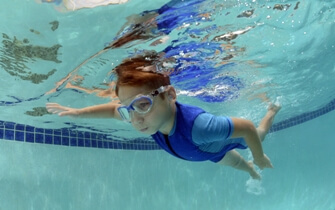 When a child is learning to swim, they need to be able to hold their breath for a reasonable amount of time. The ability to put one’s face in the water is an important part of being comfortable in the water. Unfortunately, some children (and adults), find this apparently simple act extremely difficult. The fear of water, of having your face in the water, can paralyze someone and keep them from learning to swim or ever be comfortable in the water, which then places them at a higher risk for drowning. Fortunately there are a number of people who are dedicated to helping people overcome these fears. Check out Project Face In The Water if you or your children have this reasonable but paralyzing fear. Know there is almost certainly someone in your area who focuses on teaching people who are afraid of the water.
The other extreme is holding your breath under water for too long. Competitive swimmers are regularly encouraged to swim under water for as long as possible to increase lung capacity and speed. Even casual swimmers will challenge themselves to see if they can swim the length of the pool, have breath holding contests, or just swim underwater a bit further. The more hard-core breath-holding experts go into free diving, challenging themselves to swim deeper, stay down longer, or simply to push themselves to do that extra 20 feet without a breath.
The problem is, if the body decides you have gone too long without oxygen, it will force you to breathe in. The easiest way for the body to accomplish this is to make you faint, which will then allow the involuntary motion of breathing to continue. (As opposed to the voluntary motion of holding your breath) Fainting on dry land isn’t pleasant, but it’s rarely fatal. Fainting in water can quickly lead to death by drowning. Drowning isn’t breathing in water, it’s not being able to breathe in oxygen. Trying to breathe when you are in the water is like trying to breathe in outer space, there simply is no oxygen and you suffocate to death.
When you pass out in the water, it is called Shallow Water Blackout (SWB). Unfortunately it is a leading cause of death among competitive swimmers. If you have a competitive swimmer, a risk-taker, a snorkeling enthusiast, or just a regular swimmer, learn more about Shallow Water Blackout. Understand how it happens, and how you can keep it from happening to you or someone you love.
There are a range of resources to help you. Shallow Water Blackout Prevention is raising awareness about SWB. If you are a swim coach or dive instructor, I strongly recommend you contact Aquatic Safety Research Group for information on how to coach more safely.
Breathing correctly while in and around water is one of the most calming and joyful experiences you can have. Know how and when to breathe properly. Breathe.
(And the stare down contest did come in handy, totally unexpectedly, in a showdown with a CEO when I was in my 20’s. I won.)
How To Save Your Child From Drowning
 After learning I work in water safety, a man told me about how he saved a man from drowning in Hawaii. Several families were exploring tide pools on the lava rocks and a wave swept one man into the water, about 4 feet below the rocks. The waves were wild, pounding the victim against the sharp lava as he was tossed in the churning water. Anyone who had jumped in to help him would have ended up in the same helpless position, so there would have been more than one victim and probably multiple deaths. Everyone was forced to watch the victim drown, including his wife and two young daughters. Fortunately, the man telling me the story had been a Boy Scout and had learned how to rescue someone safely. He tied beach towels together, lay on his stomach and put the makeshift rope over the side. By this time the victim was losing strength and was bleeding badly from multiple cuts. He couldn’t grab the rope. The rescuer finally starting yelling at him (in strong and rather pointed language) that he absolutely could not let his daughters watch him die. A couple of lucky waves pushed the victim against the rope and he grabbed one knot. Another lucky wave swept him up to the next knot, and slowly they got the victim onto the rocks to safely.
This is not an isolated incident. I see too many stories like this, where the would-be rescuer also dies, or a parent goes in to save a child and either both die, or just as often, the parent dies and the child is rescued by someone else. It doesn’t have to be like this.
Take the time to learn how to rescue someone safely, and teach your children.
The rule is REACH. THROW. GO.
- REACH for the person using a pole, knotted towels, an oar, anything that the drowning person can grab hold of so you can pull them to safety.
- THROW something that floats to the drowning person. A life ring. An empty gallon jug. A thermos chest. A flotation cushion. A tree log. Don’t throw it at them, just near them, you don’t want to knock them unconscious. Throw anything that floats so they can conserve their strength and try to kick back to safety. Look around, there is a growing movement to have life rings or flotation tubes near open water. Kauai and on the River Thames in the UK are leaders in this area, and yes, they have saved many lives.
- GO! Run for help! If you are anywhere near a lifeguard, there is only a 1 in 18 million chance the person will die from drowning because lifeguards are the best insurance going. If you aren’t near a lifeguard, run for more help or for something to reach or throw. Call 911. And when you are teaching your child these things, remind them ALWAYS call for an adult.
For my money, the Boy Scouts of America have the best in basic ‘how to rescue someone’ materials. Although I come from, and have, a Scouting family, you don’t have to join, you can find out what the basic requirements are for swimming and lifesaving by looking at their merit badge requirements online. Click here for swimming merit badge requirements. Click here for lifesaving merit badge requirements. The rule in my family is you have to be able to pass every requirement before the swimming lessons stop. It’s not for the badge (though my son earned his), it’s because these badges summarize one of the most basic life skills you can have. The Boy Scouts do water safety extremely well.
A final word about the Hawaii drowning scare. There were signs cautioning of the danger of being swept overboard. I realize the U.S. is so lawsuit crazy that we have signs for everything, meaning we all ignore most of them, but let me be clear, water safety is grossly underfunded. If there is a sign warning of danger in an area where there is open water, I guarantee the danger already happened. There is too much water and too little money to just be planting signs around. If there is a sign, there is a reason.
Parents, When Does Your Child Really Need A Life Jacket?
 When you think of a life jacket, that sturdy vest that keeps you afloat, you probably think of large boats. While it is true that you should ALWAYS wear a life jacket when you are on a boat, a life jacket has far more uses for keeping you and your children safer around water. Today we are going to talk about when to wear a lifejacket, what constitutes a real life jacket, and how to convince the (usually male) disbelievers to wear a lifejacket.
Let’s start with the obvious, wearing a life jacket on a boat, because too many people still leave the life jacket sitting next to them ‘in case I need it’. 70% of boating fatalities result from drowning, and 85% of those who drown are not wearing a life jacket. It doesn’t matter if you have a little Sunfish sailboat for tooling around a small lake, a ski boat, a fishing boat, or a 90 foot ocean-going Oyster, if you end up in the water unexpectedly because you trip, are hit by the boom, get knocked by a wave, are dizzy from sunstroke, or any other unexpected accident, your odds of drowning are really high. Even if you see the person go in, think for a minute how hard it is to see a wet head in the water if they aren’t also wearing a life jacket, much less how difficult it is to retrieve the person when they are shocked, cold, and maybe injured. Even if you can get back to them and haul them onboard in a matter of minutes, they may already have started the process of drowning. My mom rule is that if you are above deck, you have a life jacket on, even docked or at anchor. And if it’s rough weather, it stays on, period. The new life jackets are light and comfortable, it’s not a hardship. Granted, if you are on one of those huge passenger ferries or a cruise ship, no one expect you to parade around all day in a lifejacket, but do know where they are kept and if you have a child, know where the child-sized jackets are stored. For your own recreational boating, click here to learn about Coast Guard approved lifejackets, the only type of lifejacket you should ever trust with your child’s life, and your own life. If you are traveling, call ahead and ask, many places have life jacket loaner programs, so you don’t necessarily have to invest yourself.
What most parents don’t think about is when lifejackets should be used off of boats. If you have an inexperienced or weak swimmer, a very young child, or anyone with physical or mental limitations, have them wear a life jacket whenever they are near water. If you are in a pool and at arm’s length, it isn’t necessary, but for a day at the beach or the lake, at one of those fabulous big resort pools, or even if you just have more than one child to watch, a life jacket adds a layer of safety and peace of mind. It is almost impossible for anyone, even vigilant lifeguards, to see beneath the surface of rough water, so better to keep the head above water in the first place. Children forget they can’t swim, they jump in or walk until they are over their heads, or just get tired, and next thing you know, they are bobbing just beneath the surface.
You may be thinking, I’m covered, I picked up a great floatation suit at the store, or always have those inflatable arm bands in our bag. First anything inflatable. If it inflates, it deflates. Those inflatable arm bands are still sold everywhere, because the water safety field hasn’t gotten the message out there, but if you have some, do me a favor, pick up the scissors and drive a hole right through them before you put them in the garbage. Not only can they deflate, especially at a beach or in rough water, but they really limit a child’s arm motion if they are trying to swim. I’m all in favor of having fun in the water, and inflatable rafts and rings and toys can be great fun, but they are for fun, not for safety. Inflatable arm bands aren’t even for fun. If you have a question about any floatation suit or vest you have, see if there is a label saying it is Coast Guard approved. Or go directly to the Coast Guard website to learn more. A true life jacket can turn an unconscious person onto their back so their face is not in the water.
There is the gray area of a child who is over-confident in the water but doesn’t have solid swimming skills, or has the skills but not the confidence. For this child, you really want them in the water practicing their skills, under your supervision, but a life jacket may be too restrictive. My go-to is still the SwimFin. It’s a shark-shaped fin that straps securely around a child’s middle. A UK-product, it has passed the European Union flotation regulations, except that it is still not a life jacket, because it won’t keep someone on their back if they are unconscious. I would never use SwimFin in the ocean or any other open water that has a current, a tide, or waves, but for a pool when you want to play more safely, it is absolutely brilliant. It changed one of our vacations from my daughter saying ‘I’m bored, I want to go back to the room’ to my having to beg to get her out of the pool at the end of the day. I still kept an eagle eye on her, but it gave her the freedom to practice her strokes and jumps. Her swimming skills and confidence improved exponentially and appropriately on that trip. Major bonus, all the kids at the pool wanted to wear one because it looks so cool.
Finally, how to you convince the ‘I’m too cool to wear a life jacket’ members of your family (statistically the males). For them, I have two videos to recommend. Both tried and tested within my family. For the younger males, have them watch this ‘Heroes Wear Life Jackets’ video that features Coast Guard Rescue Swimmers. My son said he was definitely more likely to wear a life jacket after watching – because it makes life jackets cool.
For the older males, here is an award-winning interactive video that simulates what happens when you are knocked into the water. You have to keep scrolling to stay alive. I admit I couldn’t watch for long, but the guys I work with said it got pretty graphic and frightening. But, it did convince one of the most recalcitrant non-jacket-wearing avid boaters I know to start wearing a life jacket. I didn’t push or nag, just forwarded the link in an email and said, ‘thought you might find this interesting’. Sometimes all it takes to change behavior is a slight nudge in the right direction and someone else explaining why they need to change.

