
Tips and Resources for Coping with Cyberbullying
Last updated on September 24th, 2018 at 11:28 pm
Cyberbullying is the use of technology such as mobile phones and the internet to bully other people. Coping with cyberbullying can be difficult because it can happen at any time of the day.
What is Cyberbullying?
- Emailing or texting threatening or nasty messages to people.
- Posting an embarrassing or humiliating video of someone on a video-hosting site such as YouTube.
- Harassing someone by repeatedly sending texts or instant messages in a chat room.
- Setting up profiles on social networking sites, such as Facebook, to make fun of someone.
- ‘Happy slapping’, which is when people use their mobiles to film and share videos of physical attacks.
- Posting or forwarding someone else’s personal or private information or images without their permission.
- Sending viruses that can damage another person’s computer.
- Making abusive comments about another user on a gaming site.
 Are You a Cyberbully?
Even if you’re not the one who started the online bullying, you become part of it when you laugh at a message that could be hurtful or threatening to someone else, or forward it on.
Don’t let yourself get dragged into cyberbullying. Think about the impact of what you say in text messages, chat rooms and emails. Could your words be used to hurt someone else, or could they be turned against you?
In some cases, cyberbullying can be a criminal offence. For example, it could be treated as a form of harassment or threatening behaviour.
How to Respond to Cyberbullying
Do
- Talk to someone you trust. This could be a teacher, parent, carer or friend. Schools have a responsibility to ensure that students aren’t bullied, and they can take action even if the bullying is happening outside school. You can call ChildLine confidentially on 0800 1111.
- Report the bullying to the internet service provider (ISP) if the bullying happened online. Ask a parent or teacher for help, or look at Chatdanger, which has safety advice about mobiles and internet use.
- Report the bullying to your mobile phone provider if you’ve received bullying texts or calls on your mobile. You may even have to change your number if you’re repeatedly bullied through your phone.
- Block instant messages and emails. Ask a parent or teacher for help, or look at the Chatdanger website for advice on how to do this.
- Report serious bullying, such as physical or sexual threats, to the police.
Don’t
- Don’t delete the upsetting emails or messages. Keep the evidence. This will help to identify the bully if the bullying is anonymous. Even people who use a false name or email can be traced.
- Don’t reply. This is what the bully wants, and it might make things worse.
How to Avoid Being Cyberbullied
The best way to avoid being cyberbullied is to use the internet and mobile phones carefully.
- Don’t give out personal details, such as your phone number or address, in a chat room.
- Think carefully before posting photos or videos of you or your friends.
- Only give your mobile number to close friends.
- Protect passwords, and never give your friends access to your accounts.
- Don’t forward nasty emails.
- Learn how to block instant messages or use mail filters to block emails.
- Know how to report bullying to internet service providers or website administrators. Ask a parent or teacher for help, or look at the advice on Chatdanger’s website.
Information and Help with Cyberbullying
BeatBullying allows young people to get help and support each other online. If you’re being cyberbullied or bullied in any other way, you can log on to the site and chat to a cybermentor. The cybermentors are young people too and can help you work out what to do next.
Chatdanger contains safety advice on mobiles, chatrooms, email, online games and instant messaging.
Digizen focuses on responsible use of the internet. Its section on cyberbullying includes a short film called Let’s fight it together, about how a boy deals with being cyberbullied.
Editor’s Note: Cyberbullying resources for the US:
- SafeKids.com – Bullying and Cyberbullying Resources
- Stopbullying.gov
- National Crime Prevention Council
- Cyberbullying Research Center – useful tips for teens and parents

Bullying: The Facts for Kids and Parents
Last updated on May 24th, 2018 at 05:17 pm
Many children and young people experience school bullying and bullying outside of school – but you don’t have to put up with it.
Almost half of all children and young people (46%) say that they’ve been bullied at some point during their time at school, according to the Tellus4 National Report (PDF, 1.33Mb), carried out in 2009.
Find Out Where to Get Help
If you’re being bullied, you don’t have to put up with it. There are many people and organisations that can help you; see Where to find help if you’re being bullied.
If you’re concerned that your child is being bullied, read What to do you if your child is being bullied.
 What is Bullying?
Bullying can take many forms: from teasing and spreading rumours, to pushing someone around and causing physical harm. It often happens in front of other people.
It includes name calling, mocking, kicking, taking belongings, writing or drawing offensive graffiti, messing around with people’s belongings, gossiping, excluding people from groups, and threatening others.
Why are People Bullied?
Children and young people are bullied for all sorts of reasons. It can be due to their race, their religion, their appearance, their sexual orientation, because they have a disability or because of their home circumstances. People are bullied for being black, white, fat, clever, gay, or red-haired. These are a few examples.
But people are sometimes picked on for no reason.
Cyberbullying is increasingly common both inside and outside school. Cyberbullying is any form of bullying that involves the use of mobile phones or the internet. For example, sending offensive text messages and emails, circulating degrading images on the internet, or impersonating someone on social networking sites such as Facebook. For more information on cyberbullying and how to respond to it, see How to deal with cyberbullying.
The Effects of Bullying
Online bullying makes the lives of its victims miserable. It undermines their confidence and destroys their sense of security.
Bullying can cause sadness, loneliness, low self-esteem, fear, anxiety, and poor concentration, and lead to self-harm, depression, suicidal thoughts and, in some cases, suicide.
Bullying can also affect children and young people’s attendance and progress at school.
Help for Parents and Children
To find out where to get help with bullying, read:
Study: Childhood Bullying ‘Casts Shadow’ Over Adult Life
Last updated on November 24th, 2015 at 04:58 pm
 “Bullying is bad for your health,” the Daily Mail reports. The story comes from research which found that victims of childhood bullying had a higher risk of poor health, poverty and problems with social relationships in adulthood.
The study, which followed more than 1,400 participants from childhood to young adulthood, looked at three groups involved in bullying:
- Victims only – who reported being bullied but never bullying others
- Bullies only – who bullied, but had never been bullied themselves
- Bully-victims – who had been victims of bullying and also bullied others
They found that “bully-victims” seemed to be the most vulnerable group, being six times more likely to have a serious illness, smoke regularly or develop a psychiatric disorder in adulthood. “Bullies only” were at no increased risk of problems in adulthood, once other risk factors had been taken into account.
- This large study addresses an important issue – whether the damaging effects of bullying last into adulthood.
The study cannot prove that being bullied causes problems in adulthood. It is possible for example, that involvement in bullying is a marker for a pre-existing problem which would also lead to difficulties in adulthood, such as psychiatric problems or family dysfunction.
Still, this was a well-conducted study carried out over a lengthy period and its findings should be taken seriously.
Signs your child is being bullied
Sometimes children don’t talk to their parents or carers because they don’t want to upset them, or they think it will make the problem worse.
However, if you suspect that your child is being bullied, there are signs to look out for, according to the NSPCC. These include:
- Coming home with damaged or missing clothes, without money they should have, or with scratches and bruises
- Having trouble with homework for no apparent reason
- Using a different route between home and school
- Feeling irritable, easily upset or particularly emotional
For more advice and information visit the NHS Choices Bullying hub
Where did the story come from?
The study was carried out by researchers from the University of Warwick, UK and Duke University in the US. It was funded by the by the National Institute of Mental Health, the National Institute on Drug Abuse, the Brain & Behavior Research Foundation, the William T. Grant Foundation, all in the US, and the UK Economic and Social Research Council.
The study was published in the peer-reviewed journal Psychological Science. Due to the study’s topicality, it was covered widely and for the most part fairly, in the media.
What kind of research was this?
This was a prospective cohort study which followed more than 1,400 participants from childhood into young adulthood.
Its aim was to assess whether involvement in childhood bullying had any effects on areas in adult life such as:
- Health
- Wealth
- Social relationships
- Educational achievements
- Involvement in risky or illegal behaviours
Cohort studies enable researchers to follow large groups of people for lengthy periods and are useful to look at associations between behaviour (in this case, involvement in bullying) and later outcomes.
Their main limitation is whether they are able to take account of all the other factors (called confounders) which might affect those outcomes. This means cohort studies can never prove cause and effect, only highlight associations.
The researchers point out that being bullied or bullying others is a relatively common experience in childhood and adolescence. While the damaging effects of involvement in bullying in childhood are recognised, they say that this is the first study to investigate how it might affect adult life.
What did the research involve?
In 1993, the researchers recruited a random sample of three groups of children aged 9, 11 or 13 years, from 11 counties in North Carolina, 80% agreed to participate. Each child, or their caregiver, was assessed annually by structured interview, until the age of 16. Each participant was interviewed again at ages 19, 21, and 24 to 26 years. Of the 1,420 children, 89.6% were followed up into young adulthood.
At each assessment between 9 and 16 years old, children and their parents reported on whether the child had been bullied or teased, or had bullied others in the three months before the interview.
Those who had been involved in bullying were then asked for further details such as how often bullying had occurred and where (the focus in the current study was peer bullying at school, rather than for example, sibling bullying at home).
Definitions of bullying and the questions used in the interview were taken from a validated child and adolescent psychiatric assessment. Frequency of bullying and its onset were also assessed.
The definition of being bullied used in the study is that the child is a particular object of repeated mockery, physical attacks, or threats by peers or siblings.
The definition of bullying is where a child repeatedly engages in deliberate actions aimed at causing distress to another or attempts to force another to do something against his or her will by using threats, violence, or intimidation.
To assess bullying involvement, interviewers asked questions such as:
- “Do you get teased or bullied at all by your siblings or friends and peers?”
- “Is that more than other children?”
- “Are other boys and girls mean to you?”
- “Do you ever do things to upset other people on purpose or try to hurt them on purpose?”
- “Do you ever try to get other people into trouble on purpose?”
- “Have you ever forced someone to do something s/he didn’t want to do by threatening or hurting him/her?”
- “Do you ever pick on anyone?”
Participants were categorised as:
- Victims only (they never indicated that they had bullied others)
- Bullies only (they never indicated that they had been a victim of bullying)
- Bully-victims (they had indicated that they both bullied others and had been victims of bullying )
- Not involved in bullying
When the children had become young adults, they were asked about the following issues.
Health
For example, whether they had been diagnosed with a serious illness, been in a serious accident, or had a positive test result for sexually transmitted disease or whether they smoked. Weight and height measurements were also taken to work out their body mass index (BMI).
Risky or illegal behaviour
For example, they were asked whether they had been involved in fighting, property break ins, frequent drunkenness, frequent use of illegal drugs, frequency of one time sexual encounters with strangers. Official criminal charges were checked from court records.
Wealth, financial and educational status
They were asked about income and family size, whether they had completed high school or college, whether they had work or financial problems.
Social relationships
At the last adult assessment, participants were asked about their marital, parenthood and divorce status; and the quality of relationships with parents, partners and friends.
The researchers also assessed any disadvantages the child might have suffered – which they call “Childhood hardships” – using established risk scales. Hardships included, low socioeconomic status, unstable family structure, maltreatment at home and family dysfunction.
They also assessed psychiatric problems between 9 and 16, using formal diagnostic definitions. Psychiatric problems assessed included anxiety, depression, disruptive behaviour disorders and substance use disorders.
They analysed their results using standard statistical methods. The results were adjusted for both presence of ‘childhood hardships’ and childhood psychiatric disorders.
What were the basic results?
Nearly two thirds (62.5%) of the children said they had not been involved in bullying.
Nearly a quarter (23.6%) said they had been victims only, 7.9% said they had been bullies only and 6.1% had been bully-victims.
Both bully-victims and bullies were more likely to be male, but victim status did not differ by sex.Over one third (37.8%) of victims and bully-victims had been chronically bullied (bullied at two or more time points).
Once they had adjusted for childhood hardships and psychiatric problems, the researchers found that both “victims only” and “bully-victims” were at risk of poorer health, poorer finances and poorer social relationships in adulthood, compared to those who had not been involved in bullying.
By contrast “pure bullies” were not at increased risk of poorer outcomes in adulthood.
Those who had been chronically bullied had a higher level of social problems and showed a trend to financial problems, compared to those who were only bullied at one time point.
Bully victims were six times more likely to have a serious illness, smoke regularly or develop a psychiatric disorder as adults, than those who had not been involved in bullying.
How did the researchers interpret the results?
Being bullied is not a harmless rite of passage but throws a “long shadow over affected people’s lives”, say the researchers.
They suggest that being bullied may alter physiological responses to stress or interact with genetic vulnerability.
Interventions in childhood are likely to reduce long-term health and social costs, they argue.
Conclusion
This long term study suggests that victims of bullying, in particular chronic bullying, suffer long term damage which lasts into adulthood. As the authors point out, early monitoring, assessment and interventions are vital to prevent or stop such destructive behaviour.
The study does have some limitations. It relied heavily on children and adults self-reporting in many areas of life, which could affect the reliability of its results. Also, as the authors point out, the findings may not apply to other populations, particularly since American Indians (Native Americans) were overrepresented and African Americans under-represented.
In their analysis the authors tried to take account of other factors in childhood which might influence adult prospects, such as family and psychiatric problems. However, in this type of study it is always possible that both measured and unmeasured confounders might have an effect on outcomes.
This is a complex area and it is possible that involvement in bullying is a marker for a pre-existing condition such as a psychiatric problem which could also damage prospects in adulthood. On the other hand, as the authors point out, it is possible that bullying was caused by psychiatric problems in childhood, a factor that was adjusted for in their analysis. This may have led to an underestimate of the long term effects.
This is a difficult area to research and this study overall provides useful initial insights into the potential prolonged effects of childhood events.
Analysis by Bazian. Edited by NHS Choices. Follow Behind the Headlines on Twitter.
Summary
“Bullying is bad for your health,” the Daily Mail reports. The story comes from research which found that victims of childhood bullying had a higher risk of poor health, poverty and problems with social relationships in adulthood.
Links to Headlines
- Childhood bullying ‘damages adult life’. BBC News, August 19 2013
- Bullying is bad for your health: Victims of playground taunts are SIX TIMES more likely to develop a serious illness in later life. Daily Mail, August 20 2013
Links to Science
- Wolke D, Copeland WE, Angold A, Costello EJ. Impact of Bullying in Childhood on Adult Health, Wealth, Crime, and Social Outcomes. Psychological Sciences. Published online August 19 2013


From www.nhs.uk
Recognizing What Bullying Looks Like at Each Age
Last updated on May 30th, 2017 at 09:36 pm
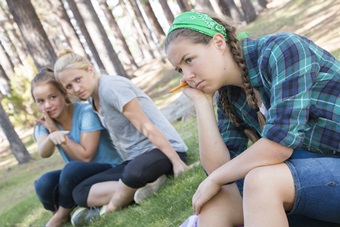 Peer cruelty is a problem and appears to be starting earlier. Though survey results do vary, by some estimates, one in seven American schoolchildren is either a bully or a victim. And the cruel behavior increases with age. A recent study prepared for the American Psychological Association showed that 80 percent of middle school students admitted to bullying behavior in the prior 30 days. The more we know about bullying, the better we will be able to parent our children.
So tune in closer to your child. Please. Repeated bullying causes severe emotional harm and erodes your child’s fragile self-esteem. Boys and girls are also bullied differently: girls are more likely to be victims of emotional and verbal bullying while boys are usually bullied by physical harm or threat. But whether the bullying was verbal, physical or relational, the long-term effects are equally harmful. Both boys and girls reported high levels of emotional distress and loneliness as well as lower self-esteem, loneliness, anxiety and depression.
Not all aggressive acts are bullying. Make sure you understand the definition.
If your child is bullied it means that peers are intentionally causing her pain. Bullying is repeated, conscious act of aggression with negative intent. There is also a power imbalance – the bullied child is targeted because they cannot hold their own.
Make no mistake: those cruel, aggressive habits are learned and should never be tolerated. Bullying also varies by ages and genders. What follows are the most common types of bullying and what it looks like by different ages and stages.
The Five Most Common Types of Bullying
There are five distinctly different types of bullying. A bully can “attack” her victim:
- Verbally (spreading rumors, saying prejudicial comments, delivering cruel remarks)
- Sexually (making sexual comments or gestures)
- Physically (hitting, slamming)
- Emotionally (excluding, humiliating, threatening, extortion, hazing)
- Electronically (cell phone, text-messaging, email or website).
Bullying by Stages and Ages
Bullying also takes on different forms at different ages. Here is what bullying looks like during the preschoolers years, school age and preteen/teens years. Of course, nothing is set in stone so your child’s experiences may differ but here are typical expectations:
1. Bullying During Preschool
These are the ages bullying behaviors are first learned because kids learn it works to get their way. Beware, new studies are showing that bullying is starting much earlier (20 percent of kindergardeners engage in bullying; an Australian study found 3 and 4 year olds engaging in peer cruelty). Little ones are imitators — watch what they imitate and stop it, ASAP! In the young set:
- Bullying is mostly physical (biting, pinching, kicking, or shoving) and usually not intentional(the true definition of bullying).
- Aggression is mostly due to impulsivity and the inability to regulate emotions. Do not allow aggressive behaviors or cruelty in any form. They easily become habits.
2. Bullying During School Age
- Verbal bullying (saying mean comments, put downs and taunts) is prevalent.
- Physical bullying continues with younger school age students.
- Around fourth grade social exclusion (leaving kids out and knowingly hurting their feelings) begins.
3. Bullying During Preteens and Teens
Bullying peaks during these years-especially during the tween years-and is also the most vicious. Average middle school student experiences at least one verbal harassment per day. Though adults big concerns generally regard cyberbullying, research shows that most bullying starts face to face. By nature, bullying is a problem with dysfunctional relationships. The most common types of bullying (though not limited to these) are:
- Relational aggression, rumor spreading and emotional bullying are common amongst girls.
- Electronic bullying (via text, IM, pagers, cell phones, websites, Facebook, and emails) also begins.
- Bullying turns to sexual harassment. Forty percent of fifth through either graders say they’ve been sexually harassed by peers (mostly boys).
While you can’t always be there to step in and protect your child there are ways to help your son or daughter be less likely to be victimized in the first place. Your first step is to get educated! A search in my blog will reap dozens of other articles on bullying. I am currently writing a book, The Complete Educator Guide for Bullying Prevention that will be available from Free Spirit Publications in Spring 2016.
***************************************************************************************************************
Dr Borba’s book The Big Book of Parenting Solutions: 101 Answers to Your Everyday Challenges and Wildest Worries, is one of the most comprehensive parenting book for kids 3 to 13. This down-to-earth guide offers advice for dealing with children’s difficult behavior and hot button issues including biting, tantrums, cheating, bad friends, inappropriate clothing, sex, drugs, peer pressure and much more. Each of the 101 challenging parenting issues includes specific step-by-step solutions and practical advice that is age appropriate based on the latest research. The Big Book of Parenting Solutions is available at amazon.com
Study: Negative Parenting Linked with Kids Being Bullied
Last updated on October 11th, 2015 at 11:15 pm
“Children who have overprotective parents are more likely to be bullied by their peers,” BBC News explains.
The news correctly presents the findings of a major study on the effects of parenting on a child’s risk of being bullied, but it focuses on the weakest finding of the research.
The study did suggest that overprotective parents may increase a child’s risk of being bullied by their peers. However, the study also found that children with neglectful or abusive parents had an even greater increased risk of being bullied.
The headlines could also have focused on the more positive results – researchers found that children brought up in an emotionally warm environment with clearly defined rules about right and wrong were less likely to be bullied. This finding is interesting given the recent news about the potentially positive effects of ‘tough-love’ parenting.
 Further studies into the association between parenting and a child’s chance of being bullied could shed additional light on the importance of a parent’s behaviour. While the findings of this study are interesting, it is not easy to see how it could be used to persuade people to change their parenting styles for the better.
Worried that your child is being bullied?
Signs that your child may be being bullied include:
- Coming home with damaged or missing clothes, without money they should have or with scratches and bruises.
- Having trouble with homework for no apparent reason.
- Using a different route between home and school.
- Feeling irritable, easily upset or particularly emotional.
If you are concerned, you should talk both to your child and to their school. If this fails to resolve the problem, there are several organisations that may be of assistance.
Read more advice for parents who are worried their child is being bullied.
Where did the story come from?
The study was carried out by researchers from the University of Warwick and Kingston University London and was funded by the Economic and Social Research Council and the Qatar National Research Fund.
The study was published in the peer-reviewed medical journal Child Abuse and Neglect.
Media coverage of this review largely focused on one of eight studied parenting styles (overprotection or “mollycoddling”). While the Daily Mail at least mentioned the larger detrimental effects of other parenting styles, some outlets (including the BBC News and the Daily Express) focused solely on the impact of overprotective parents.
The fact that the study found that a more positive parenting style – combining a mixture of emotional warmth and “firm but fair” rules – was linked with reduced chance of being bullied was not highlighted in the reporting of the study.
What kind of research was this?
The study was a combination of a systematic review and meta-analysis. It examined the relationship between parenting styles, parent-child relationships and bullying.
Researchers believe that family experiences and parenting style before children start school can influence the child’s capacity to adapt and cope at school. This can influence their relationships with schoolmates, making a child less, or more, vulnerable to bullying from their peers.
The researchers pooled the results from both prospective cohort studies and cross-sectional studies. This was to investigate the association between parenting behaviour and victimisation, and from this to identify parenting styles and family relationships that may increase the risk of victimisation.
What did the research involve?
The researchers searched the available literature for cohort and cross-sectional studies of the association between parenting behaviour and peer victimisation or bullying. They included studies that were published between 1970 and 2012 and provided a measure of relational, physical, verbal or cyberbullying.
The researchers identified parenting variables that they classified into positive and negative parenting behaviours.
The positive parenting behaviours were:
- Authoritative parenting (highly demanding, but also highly responsive parents)
- Parent-child communication
- Parental involvement and support
- Supervision
- Warmth and affection
The negative parenting behaviours were:
- Abuse or neglect
- Maladaptive parenting (high levels of hostility, hitting and shouting)
- Overprotection (or mollycoddling, as the media termed it)
The researchers included studies that recorded two types of child outcomes – victims and those who were both bullies and victims (bully/victims). They pooled the results of identified studies for each of these parenting styles to determine whether there were specific types of parenting behaviour that were associated with either the risk of being bullied or becoming a bully/victim.
The size of the effect of parenting on a child’s risk of being bullied or becoming a bully/victim was estimated using a statistical scale called ‘Hedge’s g’. This scale is widely used to assess the impact of different types of effect or effect size. For example:
- A small effect would be a Hedge’s g measurement of 0.20
- A medium effect would be a Hedge’s g measurement of 0.50
- A large effect would be a Hedge’s g measurement of 0.80
A negative effect indicates a lower likelihood of victims of bullying having parents with that particular behaviour or style compared with non-victims.
What were the basic results?
The researchers identified 70 cohort and cross-sectional studies that met the inclusion criteria. These studies included 208,778 children and young people aged between 4 and 25 years. The researchers found that different parenting styles were associated with varying risk of being bullied or becoming a bully/victim.
Both victims and bully/victims were more likely to be exposed to negative parenting behaviour including abuse and neglect as well as maladaptive and overprotective parenting (effect size 0.26, 95% confidence interval (CI) 0.16 to 0.37). When examining the types of negative parenting styles, the researchers found that all had a significant association with victimisation, including:
- Abusive or neglectful parents (effect size 0.31, 95% CI 0.18 to 0.44)
- Maladaptive parenting (effect size 0.27, 95 CI 0.15 to 0.40)
- Overprotective parents (effect size 0.10, 95% CI 0.03 to 0.17)
Conversely, overall, positive parenting behaviour had a small but significant effect, reducing the likelihood of the child being bullied or becoming a bully/victim (effect size -0.19, 95% CI -0.23 to -0.15). All five of their selected styles were associated with lower likelihood of being bullied:
- Authoritative parents (effect size -0.19, 95% CI -0.28 to -0.11)
- Good parent-child communication (effect size -0.12, 95% CI -0.20 to -0.05)
- Involved and supportive parents (effect size -0.22, 95% CI -0.29 to -0.15)
- Parents providing supervision (effect size -0.16, 95% CI -0.21 to -0.12)
- Warm and affectionate parents (effect size -0.22, 95% CI -0.30 to -0.14)
For victims, the effects were generally small to moderate for positive parenting styles (effect size -0.12 to -22) and negative parenting styles (effect size 0.10 to 0.31). For bully/victims the effects were generally moderate for positive parenting styles (-0.17 to -0.42) and negative parenting styles (0.13 to 0.68).
How did the researchers interpret the results?
The researchers concluded that negative parenting styles are associated with “small to moderate effects on victim status at school” and that “intervention programs against bullying should extend their focus beyond schools to include families and start before children enter school“.
Conclusion
This research suggests that certain parenting styles may protect children against bullying risk. These include:
- Being authoritative
- Being involved and supportive
- Being warm and affectionate
- Having good communication with your child
- Providing appropriate supervision
On the other hand, negative parenting styles were linked with an increased likelihood of being bullied. The researchers defined negative parenting styles as both “caring too much” or being overprotective and “not caring enough” or being neglectful.
Most of the headlines state that ‘mollycoddling’ your children increases their risk of being bullied. While these headlines are supported by this research, overprotective parenting styles were in fact associated with the smallest effect on bullying risk of the eight styles investigated.
The researchers point out that the other two negative parenting styles (abuse and neglect, and maladaptive parenting) were far more likely to increase the risk of a child being bullied.
The review assessed the effects of these parenting behaviours on the likelihood of the child both being a victim of bullying as well as bullying others. Generally, the relationships between parenting and the child bullying others were stronger than those between parenting and victimisation alone. Sadly, this more important finding was largely ignored by the media.
The researchers suggest that, “intervention programs that target children who are exposed to harsh or abusive parenting, may prevent peer victimization”. They also conclude that “parental training programs may be necessary to strengthen supportive involvement and warm and affectionate parenting to improve family relationships and prevent or reduce victimization by peers”.
Read more advice and information about bullying.
Analysis by Bazian. Edited by NHS Choices. Follow Behind the Headlines on Twitter.
Summary
“Children who have overprotective parents are more likely to be bullied by their peers,” BBC News explains. The news correctly presents the findings of a major study on the effects of parenting on a child’s risk of being bullied, but it focuses only on the weaker findings.
Links to Headlines
- Over-protected children ‘more likely to be bullied’. BBC News, April 26 2013
- Youngsters mollycoddled by their parents ‘are more likely to be bullied by their peers’. Mail Online, April 26 2013
- Spoiled children are most bullied. Daily Express, April 26 2013
Links to Science
- Lereya ST, Samara M, Wolke D. Parenting behavior and the risk of becoming a victim and a bully/victim: A meta-analysis study. Child Abuse & Neglect. Published online April 25 2013

Nine Ways We Can Create Safer Schools for Our Kids
Last updated on June 5th, 2018 at 03:01 pm
MORAL IQ TIP: Violence is learned, but so too is calmness. Ask yourself: if my child only had my example to watch, what would he catch today?
 Over these past few months I’ve received countless letters from parents who share a deep concern about the safety of their children’s schools. So if you’ve had a few worry pangs, believe me, you’re not alone. Be assured that children do not become homicidal maniacs overnight. They’ve usually had a gradual, steady build-up of risk factors (such as neglect, bullying, toxic parenting, failures, poor coping skills, exposure to violence, substance abuse) with limited positive experiences to counter them. Their anger starts slowly mounts, until it turns to rage then finally explodes. Do keep the perspective that 99.9% of schools are safe, but there clearly are things we can do to make our kids safer. The biggest mistake is that we continue reacting instead of preventing such atrocities and we need to start earlier. Here are a nine ways teachers and parents can make a difference in creating safer schools for our children:
1. Take threats seriously. Over seventy percent of adolescents who commit homicide or suicide, tell someone their plan before carrying it out. We must stress to kids take threats seriously and report them. Then schools should provide options for reporting such as: a 24-hour hot line, a “concern box,” designated staff members and peers, and a school Web site to email threats. Many students fear peer retaliation, so methods to report anonymously should be available.
2. Set a zero tolerance to bullying. The Secret Service study of student shootings found the only commonality was that each shooter was repeatedly bullied by peers. Schools, parents, and neighbors must set a zero tolerance to bullying. And that expectation (and infringement consequences) should be signed by all students and their parents. We must expect and demand that children treat all living beings in a moral manner and it has to start with adults.
3. Keep shooters’ photos off front pages. The media must keep the shooters off their paper’s front page and television screens. It just fuels a vulnerable kid looking for attention, and the result is too often a copy-cat shooting.
4. Teach anger management and conflict resolution. The only way kids are going to learn peacefulness is if we show them how to manage their anger. An effective strategy is called 1 + 3 + 10. Explain to your child:
“When you feel your body sending you a warning sign that says you’re losing control, do three things. First, stop and say: ‘Be calm.’ That’s 1. Now take three deep, slow breaths from your stomach. That’s 3. Finally, count slowly to ten inside your head. That’s 10. Put them all together and you have 1 + 3 + 10, and doing it helps you calm down and get back in control.”
Then help your child repeatedly practice it so he learns it.
5. Zero tolerance to weapons. Putting a fire arm into the hands of a troubled kid with a short fuse is creating a time bomb just waiting to explode. What’s especially frightening is that half of our American adolescents say they can access a gun in less than an hour. If we want safer schools, we must do everything we can to keep weapons out of our schools, and the best way is to not make them accessible to kids.
6. Monitor media viewing. Over 1000 studies-including reports from the Surgeon General’s office and the National Institute of Mental Health-validate that TV violence influences aggressive behavior in some children. Be aware of the ratings for violence on television (as well as music, movies, and video games) then set clear standards for your child and stick to them.
7. Nurture strong moral habits. Three virtues are especially critical in protecting kids against violence: a conscience that guides them to know right from wrong, empathy that helps them feel the victim’s pain, and self-control that halts immoral intentions. These core virtues are teachable, we just need to prioritize them in our homes and schools so our kids learn and use them.
8. Post warning signs for violence. Warning signs for children who may be at risk of violence should be posted everywhere such as doctor offices, Boys and Girls Clubs, school newsletters, media and list resources where parents can seek help. We must identify troubled children early and get them the help they urgently need. If you have even the slightest concern about your child, act on them now!
9. Prioritize our kids. It has been estimated parents today are spending 40 percent less time communicating with their kids than their own parents did with them and spending eleven fewer hours with their children each week compared with the 1960s. It clearly is affecting our kids. Our most important role is to raise our kids to become decent, loving human beings who feel loved. Doing so means our kids must be put back on the top of our priorities.
These warning signs of violence were developed by the U.S. Department of Education
• Social withdrawal
• Excessive feelings of isolation or rejection
• Being a victim of violence
• Feelings of being picked on and persecuted
• Uncontrolled anger
• Low school interest and poor academic performance
• Impulsive and chronic hitting, intimidating, bullying
• Expression of violence in writings and drawings
• History of discipline problems
• Past history of violent and aggressive behavior
• Drug use and alcohol use
• Affiliation with gangs
• Inappropriate access to, possession of, and use of firearms
• Intolerance for differences, prejudicial attitudes
• Serious threats of violence.
************************************************************************************************************
Dr Borba’s book The Big Book of Parenting Solutions: 101 Answers to Your Everyday Challenges and Wildest Worries, is one of the most comprehensive parenting book for kids 3 to 13. This down-to-earth guide offers advice for dealing with children’s difficult behavior and hot button issues including biting, tantrums, cheating, bad friends, inappropriate clothing, sex, drugs, peer pressure and much more. Each of the 101 challenging parenting issues includes specific step-by-step solutions and practical advice that is age appropriate based on the latest research. The Big Book of Parenting Solutions is available at amazon.com

